Jewelry Making: The Craft and How to Learn It Yourself
Want to learn jewelry making on your own?
- Cursus edelsmeden: bouw in meerdere lessen je vaardigheden op, van beginner tot gevorderd, in je eigen tempo.
- Workshops: maak in één dag je eigen sieraad, een leuke manier om kennis te maken met het vak.
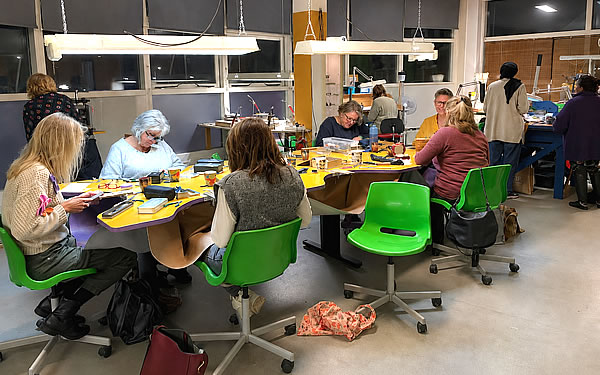
Goldsmithing: The Craft of Gold, Silver, and Platinum
Silversmithing is an age-old craft in which artisans shape precious metals such as gold, silver and platinum into jewelry, everyday objects and works of art.
It combines technical craftsmanship with artistic design and requires years of training and precision.
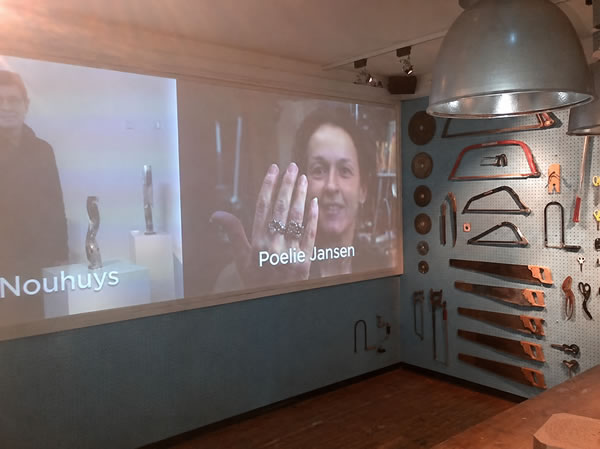
“At the Kunstmuseum Den Haag, I appear in a video at the interactive MAKERS exhibition in the Wonderkamers, where visitors can follow step by step how I make handmade jewelry.”
- Poelie
What is a silversmith?
A goldsmith is a craftsman or craftswoman who specializes in working with precious metals. Through techniques such as sawing, filing, forging, soldering, and setting, precious metals like gold, silver, and platinum are transformed into unique objects. The craft requires not only technical knowledge and precision, but also creativity, patience, and an eye for detail.
Unlike a goldsmith, who focuses primarily on jewelry, a silversmith often works in a broader range of areas: from rings and necklaces to cups, cutlery, bowls, and decorative objects. Restoring, repairing, or modifying existing pieces may also be part of the craft.
In practice, however, the terms are often used interchangeably. These days, many jewelers who focus exclusively on designing and crafting jewelry refer to themselves as goldsmiths, even though they are, in fact, also skilled in the broader craft of jewelry making.
“For me, jewelry making is the perfect combination of craftsmanship and creativity. I draw inspiration from nature, travel, other cultures, and unique gemstones.”
This is how unique pieces of jewelry come to life, with a personal look and a story that fits the wearer.”
- Poelie
History of Goldsmithing
The crafting of precious metals is one of the oldest crafts in the world.
Antiquity: As early as 6,000 years ago, gold and silver objects were made in the Middle East and Egypt. Pharaohs were buried with richly crafted gold jewelry.
Classical antiquity: The Greeks and Romans developed refined techniques such as filigree and granulation.
Middle Ages: Silversmiths united in guilds, with strict rules for training and quality. Ecclesiastical objects such as chalices and reliquaries formed an important part of the work.
Renaissance: Silversmithing flourished as a full-fledged art form; well-known artists such as Benvenuto Cellini combined sculpture with silversmithing techniques.
Modern era: Industrialization brought machine production, but hand craftsmanship survived as an exclusive and artistic discipline.
“After completing my training as a goldsmith, I furthered my education with an additional year of silversmithing. I also continue to expand my professional knowledge by regularly taking advanced courses, such as a course in filigree.”
- Poelie
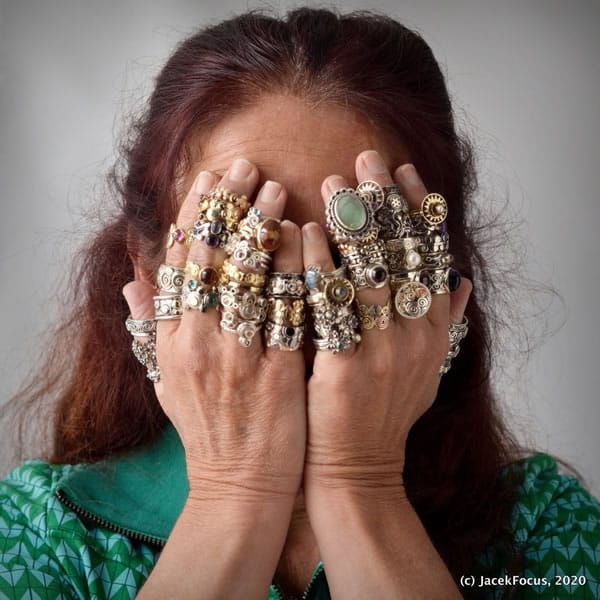
Materials
A goldsmith works with various precious and semiprecious materials:
- Gold—soft, lustrous, and corrosion-resistant; it is often alloyed with other metals for added strength (14 or 18 karat).
- Silver—popular for its beautiful luster, but more prone to tarnishing; sterling silver (925/1000) is the most commonly used alloy.
- Platinum – highly durable and hypoallergenic, but expensive and more difficult to work with due to its high hardness.
- Precious stones — diamonds, sapphires, rubies, emeralds, and many others — are often set in precious metals.
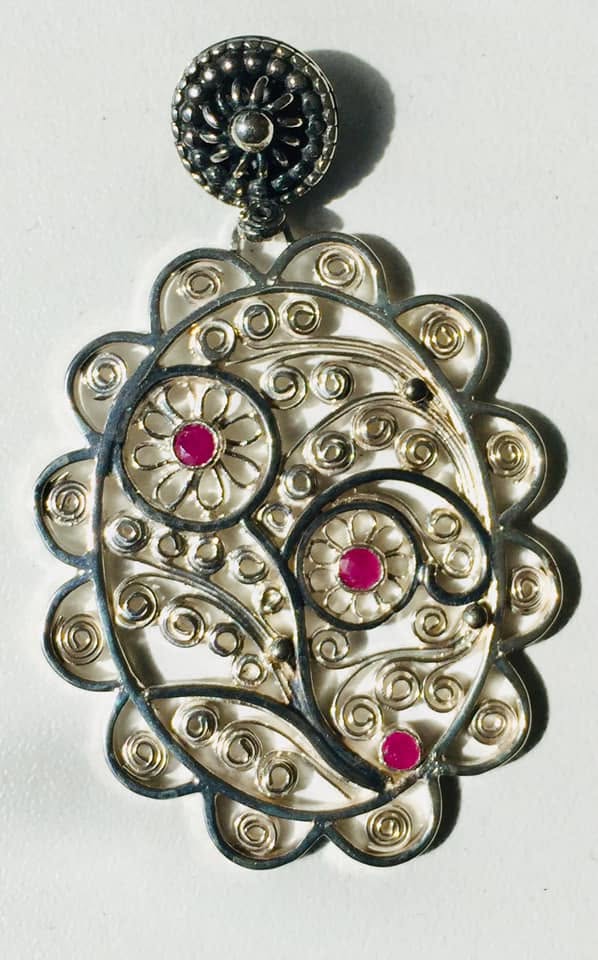
“In many pieces of jewelry, I work with a combination of different materials and gemstones. Want to see more? Take a look at my collection.”
- Poelie
Techniques
A goldsmith is skilled in a wide range of techniques, such as:
- Sawing and filing - shaping and refining metal forms to size.
- Soldering - joining pieces of metal using heat.
- Forging - shaping metal with hammer blows.
- Chasing/repoussé - shaping sheet metal in relief using a hammer and repoussé punches.
- Filigree - creating fine, lace-like patterns with thin metal wires.
- Granulation - applying tiny metal beads as decoration.
- Stone setting - the skilled mounting of gemstones in a piece of jewelry.
- Engraving - applying decorative or textual patterns with a burin.
- Enamelling - applying colored glass to metal through heating.
- Casting - creating shapes using the lost-wax process (cire perdue).
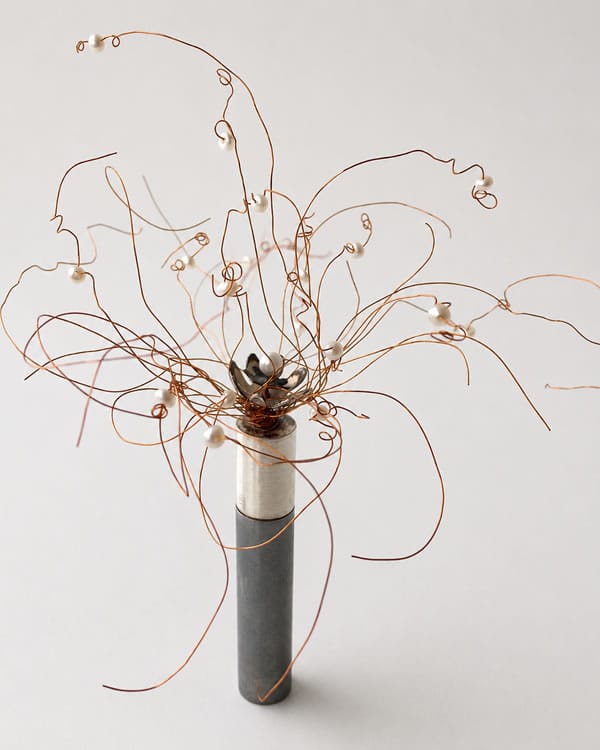
“I made a few small cylindrical boxes, which can hold ashes, a beautiful message, or a keepsake. The photo shows a memorial object that stands in my studio.”
- Poelie
A Goldsmith's Tools
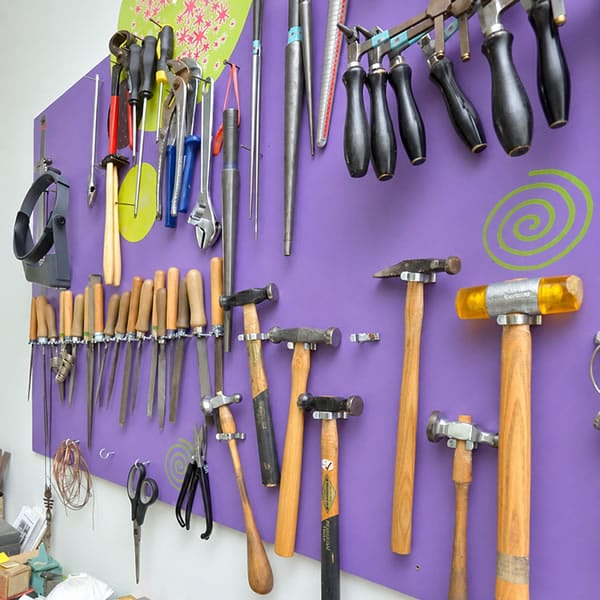
For example, a well-equipped workshop includes:
- Hammers and anvils in various sizes and shapes
- Filing, sawing, flex shaft and the drill
- A soldering torch and soldering block
- Draw bench and draw plate for making wire
- Polishing machine and polishing compounds
- Stone-setting tools and a loupe
- Sheet roller
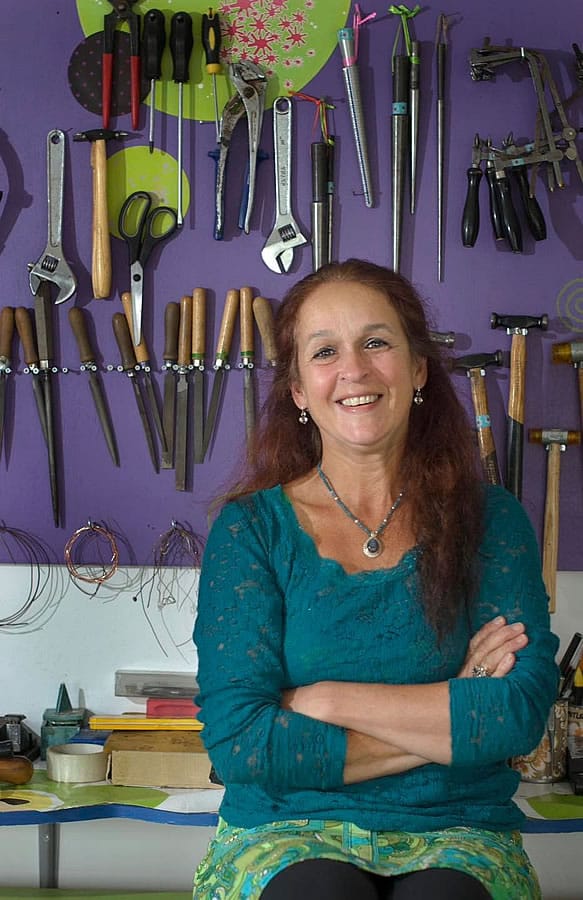
“The photo shows the tool wall in my studio in The Hague. If you come to take a course or workshop with me, you can use this free of charge.”
- Poelie
Goldsmith Training
Those who want to become a goldsmith can attend vocational training programs in the Netherlands such as the Vakschool Schoonhoven.
This vocational school is the leading center of expertise for goldsmithing, silversmithing, jewelry-making and watchmaking.
The program in Schoonhoven takes 4 years and combines theory (materials knowledge, design, gemology) with intensive hands-on experience.
“During my training in Schoonhoven, I did an internship in Indonesia, to learn the finer points of the craft there. In these photos (taken quite a while ago now), I’m granulating at my internship location.
- Poelie
Internship in Indonesia
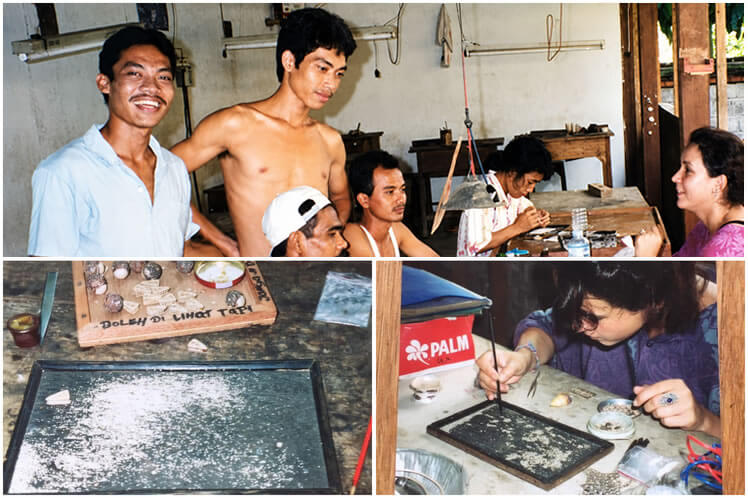
Poelie can be seen on the right in the top photo and at the bottom right.
Contemporary Goldsmithing
Within the silversmithing trade, traditional techniques are increasingly being complemented by modern tools, such as 3D design, 3D printing and laser welding. Yet handcraftsmanship remains the foundation of the trade.
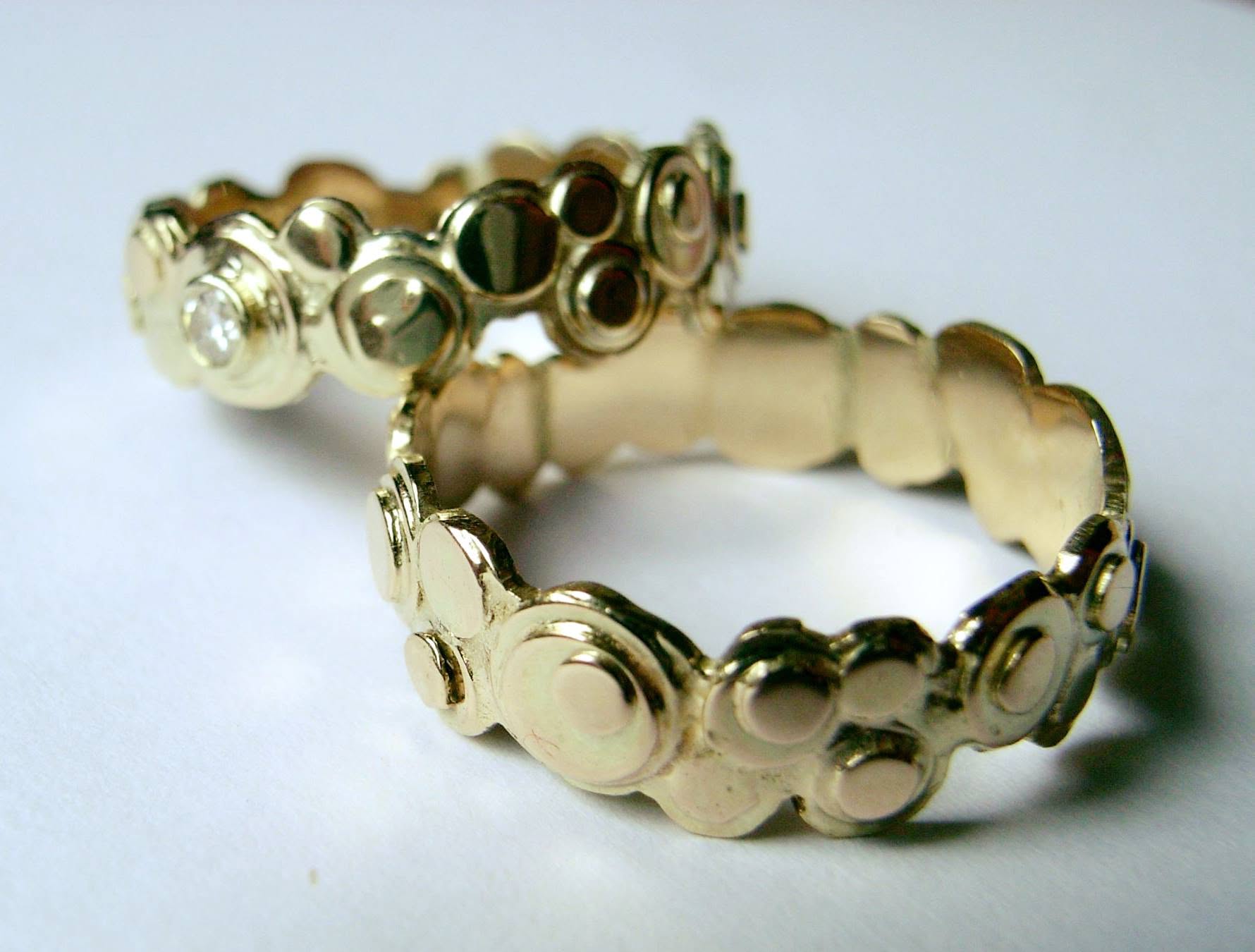
That’s exactly why many people choose a silversmith: for a unique, handmade piece of jewelry, such as custom-made wedding rings, a new piece created from a family heirloom, or a completely personal design.
Do you have an idea for a special piece of jewelry? I’d love to turn your wishes into a unique, handmade design.
- Poelie
Why choose a silversmith?
- Unique design: made to measure, no mass production.
- Quality: carefully selected materials and expert finishing.
- Personal story: jewelry with meaning, such as engagement rings or family pieces.
- Sustainability: reusing old gold and silver is increasingly possible.
- Service: from design to repair and maintenance, all under one roof.
Why Choose Poelie?
I believe a piece of jewelry should be able to tell a personal story. With my experience as a silversmith, my eye for detail and my maker's mark on the jewelry, every design stands for quality, craftsmanship and attention.
- Poelie
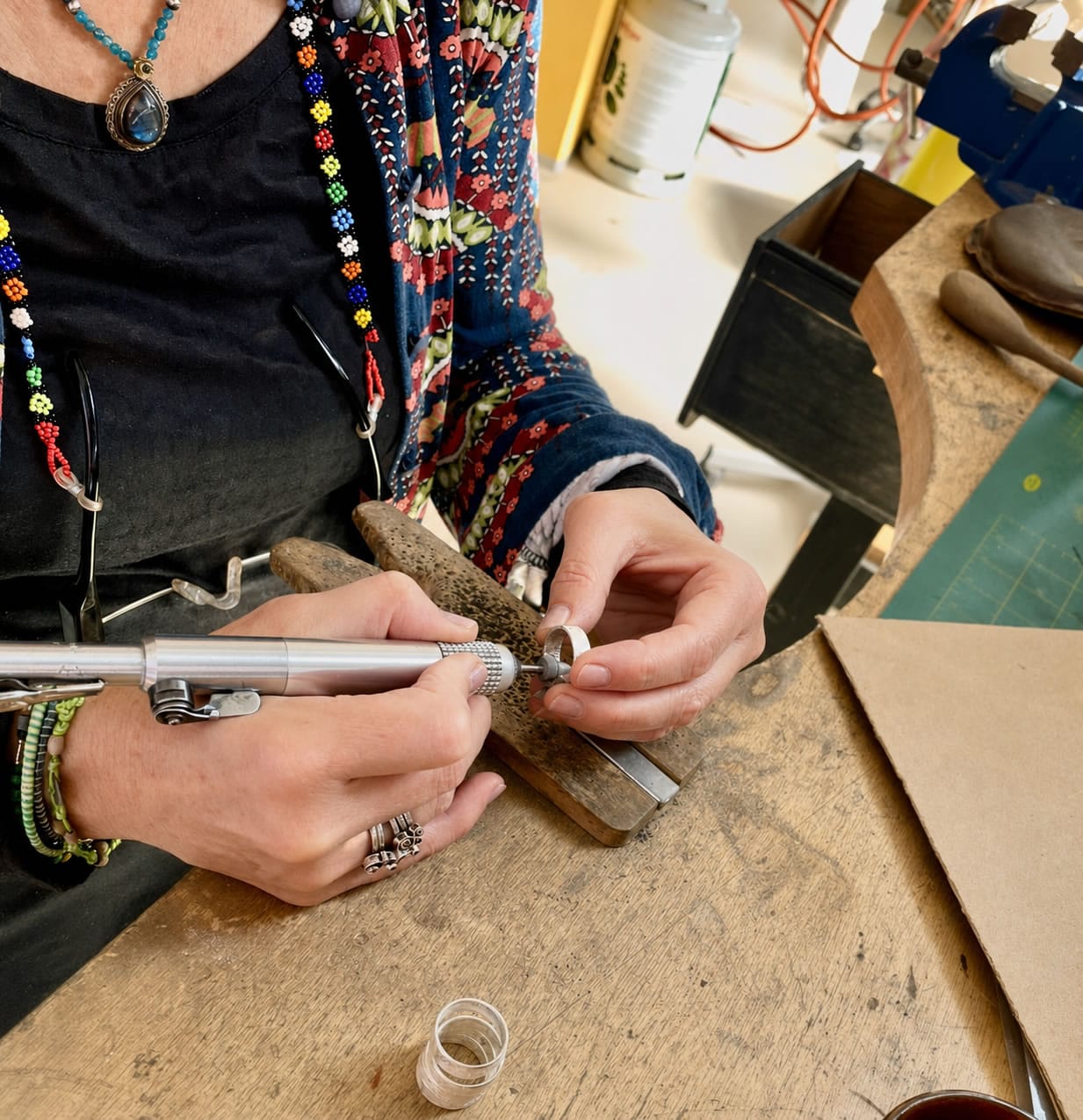
Still unsure whether to choose a course or a single workshop? In this article, Poelie helps you make the best choice.
Silversmithing Course
There are several courses to choose from:
- Silversmithing Course (12 weekly lessons) starts September 2026
This course is offered twice a year: in spring and in autumn. The course runs for 13 weeks, including one vacation week. - Basic Silversmithing Course (6 weekly lessons) starts in 2027
- Goldsmithing Specialties (continuation of the course)
Would you like to know how these courses connect? Take a look at the Silversmithing learning path at Poelie.
Still unsure which course suits you best? Read how to choose the right silversmithing course in The Hague.
Jewelry Workshops
There are various types of jewelry you can make:
- Make Your Own Ring with a Gemstone 12.00 – 18.00
- Make Your Own Diabolo Ring 12.00 – 18.00
- Make Your Own Wrap Ring 11.00-13.30 of 14.30-17.00
- Make a silver pendant 12.00 – 18.00
- Make a set of stacking rings 10.30-13.30 of 14.30-17.30
- Make Your Own Earrings 12.00-18.00
- Make Your Own Wedding Rings (entirely by arrangement)
- Custom Private Workshop (entirely by arrangement)
Take a look at the full range of workshops, or go straight to the calendar to pick your date.